
LAKES WILDLIFE: LOONS
As residents of Sugar Springs, we are blessed with an abundance of wildlife. Deer, fox, turkey and many other small animals roam about unencumbered. Our lakes are full of all types of game fish. Many species of birds fill our sky and lakes, including Bald Eagles, hawks, gulls, geese, ducks, and songbirds. The bird that best exemplifies our community is the Common Loon. Its wailing call invokes a wilderness feeling in our soul.
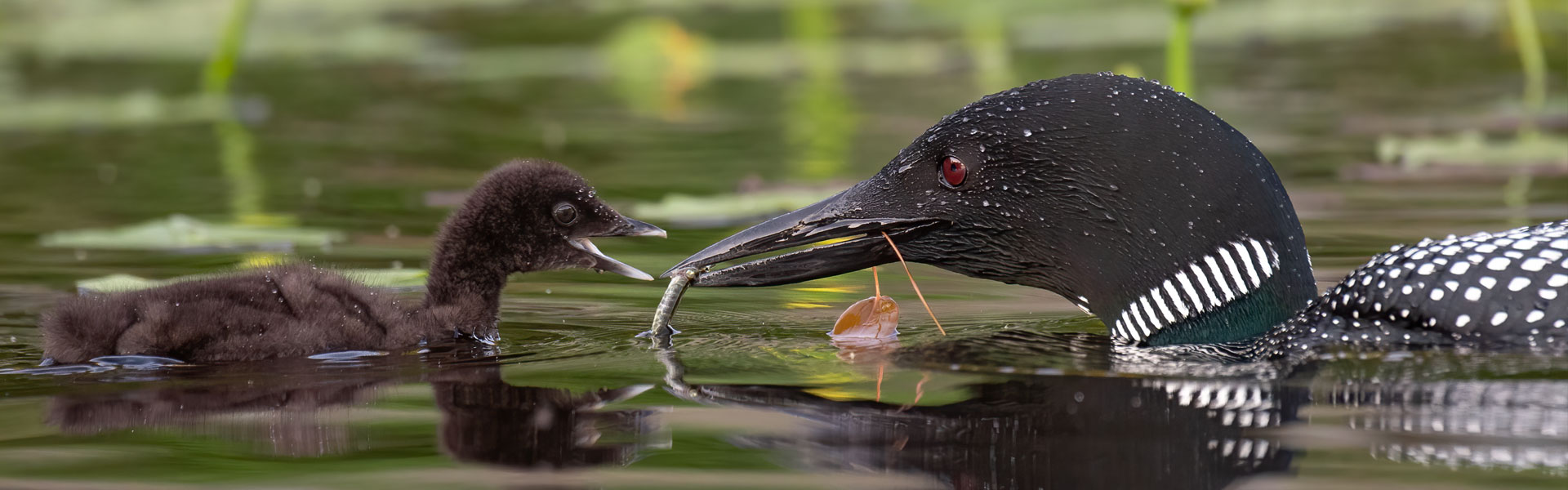
The loon is a very large bird and can be recognized by its many white spots on its black back, and a white necklace around its neck. It is an excellent swimmer diving for food with consummate grace. They require a lake with clear water and large surface area; clear water for spotting fish below the surface, and large areas to take and fly.
Their legs are in the rear of their bodies which makes for excellent swimming and diving but almost impossible to walk on land. Unlike other birds the loon’s bones are not hollow which makes it easier for diving but difficult to lift off the water to fly.
Loons are monogamous having the same mate for its entire life, reuniting with their mates each summer. They build their nests in coves and on islands close to banks. Both male and female tend the nest made from mud and grass. Their eggs hatch in May. One or two chicks is normal. Chicks can swim after a few hours and can be seen following the female or riding on her back. Many chicks are eaten by large fish like pike and bass. Hawks, eagles, and gulls also are predators of the small chicks. Adult loon’s biggest predator is man. Acid rain, oil, and other pollutants kill many adult birds.
Loons eat small fish, crustaceans, fogs and insects. A family of loons can eat 1000 pounds of fish in their 15- week summer stay on one of North America’s lakes. When the October winds turn cold, they start for the ocean coast for their winter homes.
As members of our community, it is our responsibility to assure our lakes are kept clean, and nesting areas are protected. Failure to do so may someday spell the end to this magnificent bird.
The Lakes Committee
Further information can be found at Michigan Loon Preservation Association and Northern Michigan's Common Loon