
PRESERVING NATURAL SHORELINE
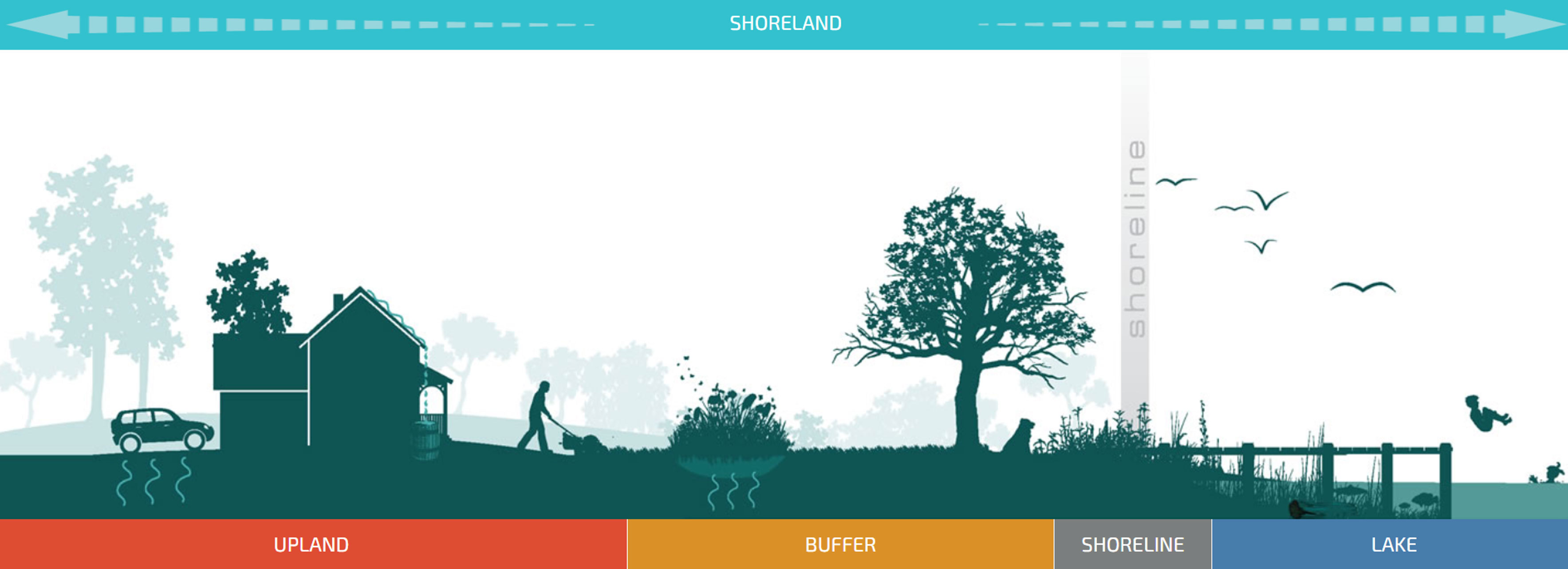
The shoreline is a very important area of the shoreland. The biggest threat to Michigan's inland lakes is the loss of nearshore habitat. Sugar Springs was developed to maximize the number of lake front lots for private homes. It is clear that high impact development such as removing native plants on the land and in the water, excessive impervious surfaces (buildings, driveways, etc.) and seawalls are causing problems for inland lakes. Studies have shown that when habitat is lost both on the land and in the water, there is harm to the birds, frogs, turtles, insects, fish, and other wildlife that depend on certain plants for their survival.
A Natural Shoreline is the implementation of lake friendly landscaping and erosion control methods. These lake friendly practices can be done in a way that minimizes negative impacts to the lake and meets lakefront property owners’ recreational needs as well as help keep the lake clean, maintain or restore habitat for fish and wildlife and create a beautiful place to enjoy nature.
A primary reason for erosion is the loss of native plants both in the lake and on the shore. The shoreline is where many property owners experience erosion. In the past, a seawall was a common solution for erosion control. Seawalls cause many problems for the lake and neighboring properties. Wildlife that need to get in and out of the lake (i.e., turtles need to lay their eggs on land) find a wall they cannot climb. Seawalls cause erosion on neighboring properties and erode the lake bottom (scour) because the wave energy hitting the wall goes sideways and downward.
"Bio-engineering" is a technique that is an eco-friendly option to seawalls. This can solve shoreline erosion in a way that supports the lake ecosystem and protects lakefront property. Bio-engineered shoreline erosion control is usually applied as a system of applications that provide upland stabilization, bank toe stabilization and bank toe protection. All of these methods require the reintroduction of deep-rooted native plants to create a system that mimics naturally stable shorelines.
Native Plants that are common in Michigan are a critical component of ALL bio-engineered shoreline erosion control solutions. Plants should be chosen which best suit the site to provide the best potential for shoreline stabilization. They should be a mix of flowers, grasses, sedges and even trees and shrubs. The plant selection can also be tailored to meet the desires of the property owner, but the priority should be providing the best root structure for long term success. Planting options come in plugs, pots, and live stakes.
Logs, coconut fiber and rocks can also be used in combination with native plants when utilizing a natural shoreline erosion solution.
In Summary, when the time comes to repair or replace your current seawall consider a Natural Shoreline. This eco-friendly solution will beautify your property, increase the natural wildlife habitat, and may even save you a few bucks in the process!
We would like to thank Michigan Natural Shoreline Partnership and Michigan Shoreline Stewards Program for providing the information in this document. For further information click on their links.